Solving Belt Slippage in High-Torque Machinery: A Sables Engineering Case Study
I. Introduction: The High-Torque Dilemma
In the demanding world of industrial manufacturing, operational efficiency is measured by the steady, uninterrupted hum of production lines. For plant managers in sectors like wire and cable extrusion or high-speed textile weaving, every second of unscheduled downtime translates into immediate financial loss. Recently, we were contacted by a high-volume manufacturing client experiencing a recurring, "painful" production bottleneck: persistent belt slippage and "tooth skipping" on their primary drive systems. Despite multiple attempts to increase tension and replace belts with standard off-the-shelf alternatives, the issue remained unresolved. The machine would consistently shudder under heavy torque loads, resulting in rejected products and costly delays. As a premier industrial power transmission manufacturer strategically based in China, Jiangxi Kangqi Industrial Co., Ltd. (Sables) stepped in to conduct a comprehensive mechanical audit, transforming this crisis into a definitive engineering case study on the importance of material science and precision synchronization.
II. The "Aha" Moment: Why Standard Belts Failed
Upon our initial inspection of the failed machinery, the root cause of the slippage became clear. The client had been utilizing generic, low-grade rubber timing belts that were fundamentally ill-equipped for the high-torque, high-heat environment of their production line. Our audit revealed two specific mechanical failures. First, the standard belts lacked the thermal stability required for the application; under continuous operation, the rubber compound would soften and elongate, leading to a catastrophic loss of belt tension. Second, and more importantly, the tooth profiles of the standard belts were not manufactured with the necessary geometric precision, causing the teeth to lose contact with the pulley grooves under peak loads. This lack of "positive drive" engagement meant the belt was effectively riding on top of the pulley teeth rather than meshing, resulting in the violent "jumping" sensation that damaged the equipment. The client had been chasing the symptoms—constantly re-tensioning and replacing belts—rather than addressing the fundamental engineering deficiency of their transmission system.
III. The Sables Solution: Upgrading to High-Performance CR Synchronous Belts
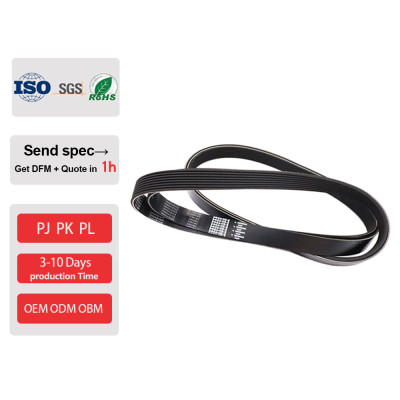
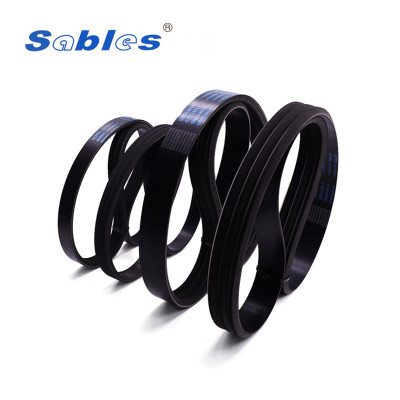
To solve this, Sables proposed a comprehensive drive upgrade using our high-performance, precision-engineered CR (Chloroprene Rubber) synchronous belt series, specifically transitioning the client to our HTD/8M/14M tooth profile configuration. We replaced the generic, stretching belts with our premium Sables belts, which are formulated for extreme industrial duty. The difference was immediate. Our CR compound offers a unique combination of high tensile strength and superior thermal resilience, ensuring that the belt maintains its pitch integrity even when the machinery reaches peak operational temperatures. We incorporated ultra-strong, non-stretch fiberglass tensile cords, guaranteeing that the belt would not elongate during the brutal start-stop cycles of the machine. The precision of our HTD/8M/14M tooth profiles ensured 100% positive engagement with the drive pulleys. By converting the drive from a friction-dependent system to a precision-meshing synchronous system, we effectively "locked" the motor power to the machine output, eliminating all slippage.
IV. Results: Quantifying Success
The transformation was quantifiable across every key performance indicator. Before the upgrade, the maintenance team was forced to re-tension the belts every 72 hours, an exhausting cycle that resulted in 4 hours of machine downtime per week. The audible chatter of the slipping chains and skipping belts created a high-decibel, chaotic work environment. After installing Sables’ CR synchronous belts, the results were definitive:
· Zero Slippage: The positive-drive HTD tooth profile eliminated tooth skipping, even at the highest torque settings.
· Zero Slippage: The positive-drive HTD tooth profile eliminated tooth skipping, even at the highest torque settings.
· Increased Production Speed: With a stable transmission, the client was able to push the machine to its design-rated speed limit for the first time.
· Reduced Downtime: Maintenance hours dropped by 95%. The "install-and-forget" reliability of the Sables belt meant that the weekly 4-hour re-tensioning cycle was eliminated entirely.
· Acoustic Improvement: The factory floor decibel level dropped significantly, creating a safer and more focused work environment for the technicians.
As a trusted supplier, we showed the client that high-quality rubber components are an investment that pays for itself in less than one month of optimized production.
V. The Sables Advantage: ISO 9001 Consistency
Why did the Sables upgrade work when others failed? The answer lies in our unwavering commitment to consistency. As an ISO 9001-certified manufacturer, Jiangxi Kangqi Industrial Co., Ltd. (Sables) enforces strict quality control at every stage of the rubber compounding and vulcanization process. When a distributor or an OEM buyer purchases a wholesale batch of Sables HTD/8M/14M belts, they are guaranteed that the 1,000th belt in the batch is physically and dimensionally identical to the first. We eliminate "random" mechanical failures by ensuring that our raw materials—the high-grade Chloroprene Rubber and the structural tensile cords—are sourced and processed under constant surveillance. For our global partners, this means that once you specify a Sables belt for your machine, you never have to worry about batch variability or unexpected failures. We provide the technical certainty that global B2B clients demand.
VI. Conclusion: Stop the Slippage, Start Producing
The Sables case study proves a critical industrial truth: slippage is not an inevitability—it is a design flaw. Whether you are operating textile looms, cable extrusion haul-offs, or heavy-duty packaging machinery, high torque should be transmitted with precision, not lost through friction. Upgrading to Sables’ CR rubber synchronous belts is an investment in long-term machine uptime and operational peace of mind. We invite engineers, plant managers, and industrial distributors to contact the Sables branch office today for a free drive-system engineering analysis. Send us your pulley specifications and load parameters; our team will provide a comprehensive, slippage-free replacement specification that will modernize your drive system and maximize your production capacity. Don't let your machinery slip away—partner with Sables today for mechanical excellence.